
We’re Definition Master Correct Usage Avoid Common Mistakes
Why understanding "we’re" matters (and how this guide helps)
Have you ever stopped for a moment, wondering if you should write "we’re," "were," or "wear"? It’s a common little puzzle for many of us, and it can make a big difference in how clear our writing comes across.

Sometimes, mixing up these words can change what you mean to say completely. For example, if you mean "we are happy" but write "were happy," it sounds like you were happy in the past, not right now!
Many people aren’t quite sure about the correct "we’re definition" and how to use it in sentences. That little apostrophe (‘) makes a huge difference. It tells us that two words have been put together. Knowing the right way to use "we’re" means your messages are easy to understand, whether you’re sending a quick text or writing something important.
Just like understanding all the little details is key for clear writing, it’s also vital for other important areas. For example, when you need to understand complex topics like your crypto taxes in 2026, having a helpful resource, such as a guide to avoid tax chaos and stress, can make a huge difference in staying organized and feeling prepared. This article aims to bring that same kind of clarity to "we’re."
This guide is here to help you get it right every time. We’ll give you simple definitions, easy grammar rules, and tips on how to say "we’re" correctly. We’ll also look at common mistakes so you can avoid them. By the end, you’ll know exactly what "we’re meaning" is and how to use it with confidence. You’ll even find quick practice ideas to help you remember. For more simple lessons and tips on tricky topics, you might find the free Clicks and Trades newsletter very helpful.
Want more easy-to-understand tips like these?
Sign Up for the Clicks and Trades newsletter today.
What does "we’re" actually mean?
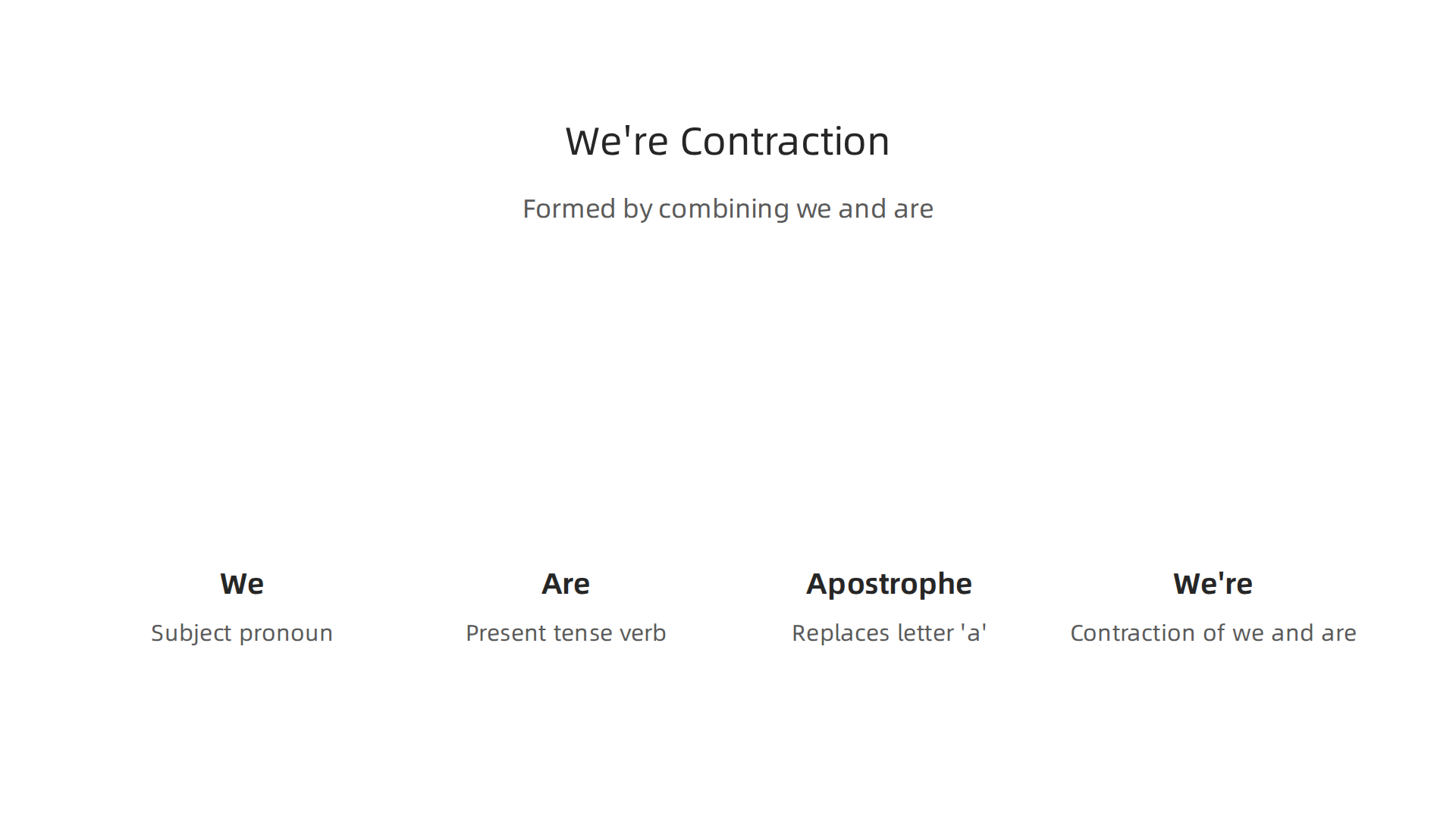
Let’s clear things up right away. The "we’re definition" is simple: "we’re" is a shortened way of saying "we are." That little mark called an apostrophe (‘) is there to show that some letters have been taken out. In this case, the apostrophe stands in for the letter ‘a’ from the word "are" (YourDictionary.com).
Think of it like a quick shortcut for speaking and writing.
This kind of shortcut is called a contraction. Contractions bring two words together into one, making our language more smooth and natural, especially when we talk (Scribbr.com). So, when you see "we’re," you know it’s a team effort. The "we" part is a pronoun, meaning a group of people including yourself. The "are" part is a verb, which tells us what "we" are doing or being right now. Together, "we’re" acts as both the people involved and their current state or action (Study.com).
For example, instead of saying, "We are going to the park," you can say, "We’re going to the park." It means the exact same thing, but it sounds a bit more friendly and flows better.

You’ll hear people use "we’re" all the time in everyday talks. It makes sentences quicker to say and write. Just remember, the core "w e r e meaning" inside "we’re" is always "we are."
Sometimes, people confuse "we’re" with "were" or "where." But once you know that "we’re" always means "we are," it becomes much easier to pick the right word. For example:
- We’re excited for the party. (We are excited)
- We’re learning something new every day. (We are learning)
Knowing these small but important grammar rules can really help make your messages super clear. This clarity is helpful in all parts of life, even when you’re trying to understand tough topics like your financial records. If you need simple guides for complex tasks, like figuring out your money matters, remember that clear steps make a big difference. For instance, staying organized with your financial information can help you avoid big headaches. You might find a helpful resource like this guide to the 2026 crypto bookkeeping guide useful for keeping track of tricky details.
For more easy-to-understand tips on tricky subjects, especially in the world of money and digital assets, you might like the free Clicks and Trades newsletter. They offer clear guidance just like this article.
Want more easy-to-understand tips like these? Sign Up for the Clicks and Trades newsletter today.

Grammar structure: contraction mechanics and when to use ‘we’re’
We just learned that "we’re" is a short way to say "we are." But how exactly do these shortcuts work in English? Well, contractions like "we’re" happen when we take two words and squish them together. To show that some letters are missing, we use a special mark called an apostrophe (‘). For "we’re," the apostrophe takes the place of the letter ‘a’ from "are" (YourDictionary.com). It’s like doing a quick clip of the word "are" and adding an apostrophe.
This way of shortening words is super common. Think of it as a helpful trick to make our sentences flow better, especially when we’re talking. In writing, contractions like "we’re" also make things sound more natural and friendly (Scribbr.com). They combine a pronoun (like "we") and a verb (like "are") into one neat package (Cambridge Dictionary). Even though letters are removed, the full "w e r e meaning" of "we are" stays the same.
When you use "we’re," you’re actually using a subject and a verb that agree with each other. The word "we" is the subject. It means you and other people. The "are" part is the verb, which tells us what the "we" is doing or being. Because "we" is a group, we use "are," not "is." So, "we’re" works perfectly because it combines "we" and "are" correctly. It’s a simple rule, but it helps make sure our sentences are grammatically sound.
So, when is it the right time to use this "we’re definition" in your sentences? You’ll use "we’re" in two main situations:
-
To talk about things happening right now (present continuous tense): This is when "we are" doing something at this very moment.
- Example: "We’re going to the beach later today." (Meaning: We are going.)
- Example: "We’re working on a fun project right now." (Meaning: We are working.)
-
To describe who "we" are or what state "we" are in (identity statements): This is when "we are" being something.
- Example: "We’re very happy to see you." (Meaning: We are happy.)
- Example: "We’re ready for the big game." (Meaning: We are ready.)
- Example: "We’re the team that won last year." (Meaning: We are the team.)
Remember, the basic rule for the "we’re definition" is always: does it mean "we are"? If yes, then "we’re" is the correct choice. Using contractions properly helps your writing and speaking sound clear and confident. Just like understanding these grammar basics, knowing the ins and outs of tricky subjects like crypto taxes can save you a lot of worry in 2026. For example, using a simple guide to unlock easy crypto taxes with a federal tax calculator 2026 can make a huge difference.
If you like getting clear, easy-to-understand guides on complex topics, you might enjoy the free Clicks and Trades newsletter. It’s packed with simple steps and helpful tips to make sense of things. Check out Clicks and Trades for more useful information.
Want more clear, step-by-step guides like this? Sign Up for the Clicks and Trades newsletter today.
Here’s how that little word "we’re" comes from the longer phrase "we are." It’s a simple trick in English that helps us speak and write more quickly. When we talk about the "we’re definition," we’re really just talking about "we are" in a shorter form.
Think of it like this:
- Start with the full words: You have "we are."
- Find the letter to remove: The letter ‘a’ from "are" is the one we take out.
- Add the apostrophe: In its place, we put a little mark called an apostrophe (‘). This shows that a letter is missing.
- Put it together: "We" + "are" becomes "we’re."
So, the "w e r e meaning" remains the same, but the word gets shorter. This makes it a handy tool in many sentences.
You’ll use "we’re" in lots of ways:
- To talk about what you are doing right now (present progressive):
- "We’re packing our bags for vacation." (Meaning: We are packing.)
- "We’re studying for a big test." (Meaning: We are studying.)
- To describe who or what you are (with adjectives or nouns):
- "We’re excited about the movie tonight." (Meaning: We are excited.)
- "We’re a team that works very well together." (Meaning: We are a team.)
- In short, quick answers:
- "Are we going?" "Yes, we’re!"
Using contractions like "we’re" makes your writing sound more friendly and natural, especially in things like emails, blog posts, and social media updates in 2026. This is often encouraged in informal writing because it helps you write the way you speak, making it feel more conversational and easier to read 1 2.
However, you’ll want to be careful in very formal writing, like some school papers or official documents. In these cases, many experts suggest using the full "we are" instead of "we’re" 3 4. The rule of thumb is to know your audience and the purpose of your writing. For most everyday communication, "we’re" is perfectly fine.
Just like understanding the "we’re definition" helps make your words clear, having clear guidance on tricky topics like crypto taxes can save you a lot of trouble. If you’re wondering about managing your digital assets, learning about a comprehensive guide to crypto taxes for 2026 to avoid penalties and audits can be very helpful.
Want more clear, step-by-step guides like this? The free Clicks and Trades newsletter offers simple steps and helpful tips to make sense of complex topics. Sign Up for the Clicks and Trades newsletter today.
It’s easy to mix up words that sound alike, isn’t it? Even words like "we’re," "were," and "wear" can cause confusion, especially because they are very common in English. But don’t worry, we’re going to make it simple to tell them apart. Many people make these mistakes, but knowing the difference will make your writing much clearer.

Learning how to avoid these common grammar mistakes helps everyone 1.
Let’s look at each word one by one.
We’re (we are)
As we talked about, "we’re" is a short way to say "we are." It’s a contraction, meaning two words squeezed into one with a little apostrophe showing where letters are missing 2.
The "we’re definition" is simply "we are."
- Use it when: You want to say "we are" but in a shorter, friendlier way.
- Example: "We’re happy to see you." (Means: We are happy.)
- Example: "We’re going to the store now." (Means: We are going.)
Were (past tense of ‘are’ or ‘be’)
"Were" is about something that happened in the past. It’s the past tense form of the verb "to be," used when talking about "we," "you," "they," or many people or things.
- Use it when: You are talking about something that already happened.
- Example: "We were at the park yesterday." (Happened in the past.)
- Example: "They were excited about the game." (They were excited in the past.)
- How to check: If you can replace "were" with "we are" or "we’re" and it sounds wrong, then "were" is likely the correct word. The "w e r e meaning" always points to past actions or states.
You can often hear the difference between "were" and "we’re" when people speak, and there are helpful videos online that show you how to pronounce them correctly 3.
Wear (to have on your body or to make something old)
"Wear" is a verb that has two main meanings:
- To put clothes, jewelry, or accessories on your body.
- Use it when: You’re talking about dressing up or what you have on.
- Example: "We wear hats in the winter."
- Example: "She likes to wear bright colors."
- To damage something over time from use.
- Use it when: Something is getting old or breaking down because it’s been used a lot.
- Example: "These old shoes are starting to wear out."
Quick Tips to Get It Right
Here’s how you can quickly figure out which word to use:
- Try replacing it with "we are": If the sentence still makes perfect sense with "we are," then "we’re" is the correct choice.
- Wrong: "We are at the beach last week." (Doesn’t make sense.)
- Right: "We’re excited for the trip." (We are excited.)
- Think about time: If you’re talking about something that happened in the past, choose "were."
- Example: "We were very young when we first met."
- Think about clothes or damage: If you’re talking about putting something on your body or something getting worn out, pick "wear."
- Example: "I need to wear my coat."
Getting these words right helps you communicate clearly and confidently in 2026. Just like understanding these simple word differences can save you from grammar mistakes, understanding your crypto tax obligations can save you from big headaches. If you’re into digital assets, getting a handle on your financial records for crypto taxes is a must. You can learn more about making sure your records are in order with a guide to the 2026 crypto bookkeeping guide to avoid tax chaos and stress.
For more simple steps and helpful tips on complex topics, whether it’s grammar or understanding new things like crypto, the free Clicks and Trades newsletter can be a great resource.
Want more clear, step-by-step guides like this? The free Clicks and Trades newsletter offers simple steps and helpful tips to make sense of complex topics. Sign Up for the Clicks and Trades newsletter today.
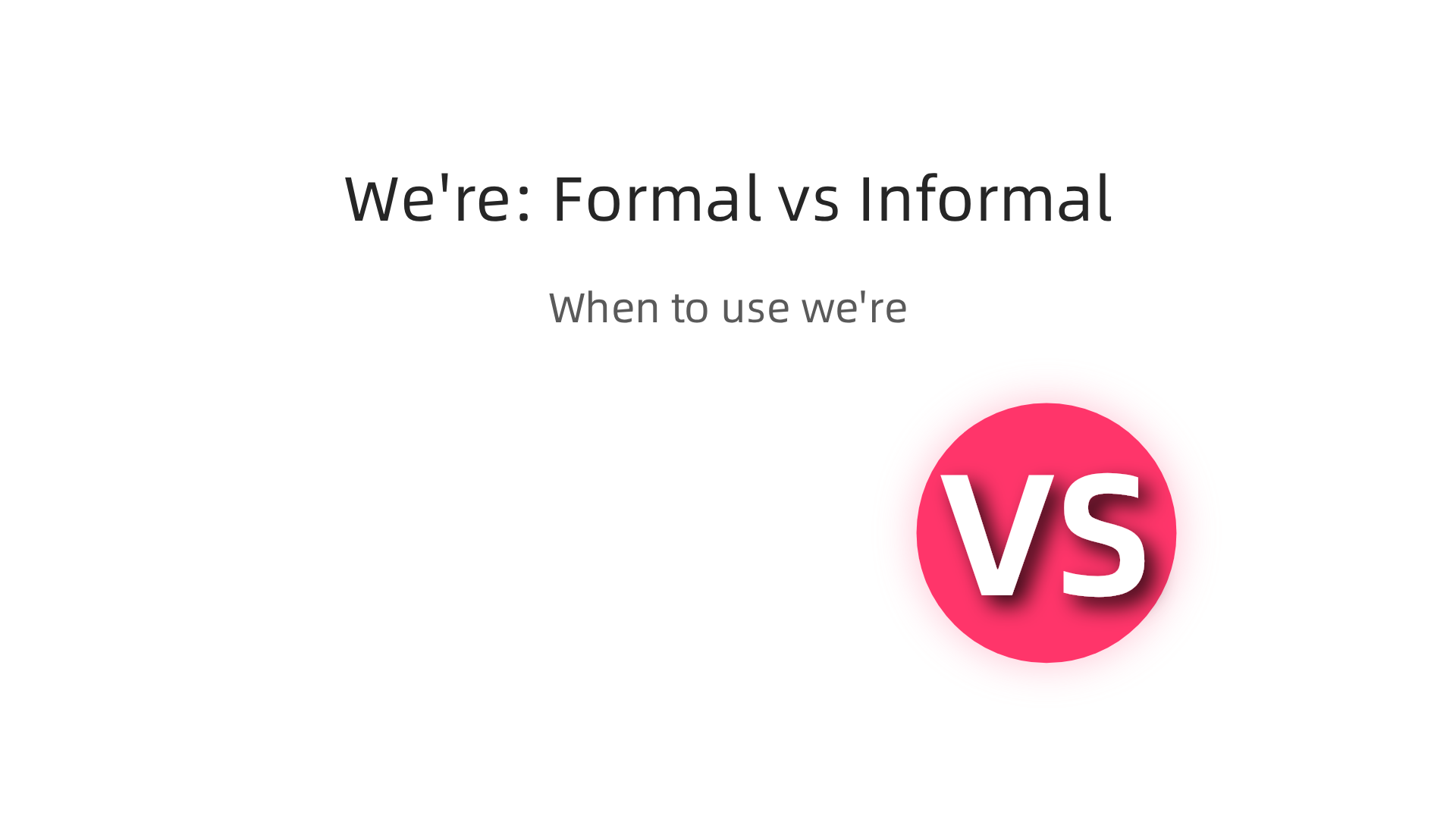
Formal vs informal writing: should you use ‘we’re’?
Now that we know the "we’re definition" means "we are," let’s talk about when it’s okay to use it. You see, how you write depends on who you’re writing to and why. This is called formal or informal writing.
When to Skip "We’re"
Most of the time, in very serious or "formal" writing, it’s a good idea to write out the full words instead of using contractions like "we’re." Think about these situations:
- School papers: For essays or reports for school, teachers often want you to use full words. They want you to write "we are" instead of "we’re" to be extra clear and formal 1.
- Work documents: If you’re writing a report for your job or an important email to a client, it’s best to avoid "we’re." Using "we are" makes your writing look more professional 2.
- Official papers: Any government document or very serious writing will almost always use "we are."
Many writing guides agree that contractions are not usually right for formal documents 3.
When "We’re" is Perfectly Fine
On the other hand, "we’re" is great for making your writing sound friendly and natural. It’s often used in "informal" writing, which is most of what we read and write every day!
- Friendly emails and texts: When you send a message to a friend or family member, "we’re" is perfect. It helps your message sound like you’re talking.
- Blog posts and social media: Like this blog post! We use "we’re" here because it helps us chat with you in a relaxed way 4.
- Creative writing: If you’re writing a story or a poem, contractions can help your characters sound more real.
- College essays: Actually, some experts say using contractions in college essays can make your writing feel more natural and engaging 5. It helps your own voice shine through.
So, the key is to think about your reader. Will they expect very proper language, or will a more conversational tone be better?
Here’s a quick way to remember:
| Type of Writing | Should You Use "We’re"? | Why? |
|---|---|---|
| Formal | Mostly No | Sounds more serious and professional. |
| Informal | Yes | Sounds friendly, natural, and like talking. |
Getting these small grammar points right makes your communication super clear in 2026. This is true for all kinds of complex topics. For example, understanding what you need to do for your crypto taxes can seem hard. But getting your records in order is a smart move that saves you stress. Learning about how to keep good financial records for your digital money is super important. You can find out more about this by checking out the 2026 crypto bookkeeping guide to avoid tax chaos and stress.
For more simple steps and helpful tips on complex topics, whether it’s grammar or understanding new things like crypto, the free Clicks and Trades newsletter from Clicks and Trades can be a great resource.
Want more clear, step-by-step guides like this? The free Clicks and Trades newsletter offers simple steps and helpful tips to make sense of complex topics. Sign Up for the Clicks and Trades newsletter today.
Now that we know the "we’re definition" means "we are," let’s talk about how it actually sounds when people say it. Sometimes, how a word looks and how it sounds can be a little different, especially with words like "we’re."
How ‘We’re’ Sounds (Phonetics and Variations)
You might think "we’re" sounds just like "we" and "are" smashed together. And sometimes it does! But often, when we’re talking fast, the sound changes a bit. The way a word sounds can even depend on where someone lives and what accent they have.
The basic sound of "we’re" is usually like saying "wee-er" or "wair" very quickly. For example, in places like the UK and Australia, it often sounds like "wih-uh" or "wuh" when it’s not stressed in a sentence 1. In America and Canada, it often sounds like "wihr" 1.
Here’s the thing: when "we’re" is part of a longer sentence, people often say it faster and make the sound shorter. This is called a "reduced" pronunciation. Instead of a strong "wee-are," it might just be a quick "w’r" sound. People reduce words like this all the time without even thinking about it 2.
Dialect and Accent Fun Facts:
- American English: Many people in the US might say "we’re" with a clear "r" sound at the end, making it sound a bit like "weer." You can hear this in how native speakers pronounce it 3.
- British English: In parts of the UK, that "r" sound at the end often disappears, especially if the next word doesn’t start with a vowel. So, it might sound more like "wee-uh."
It’s helpful to hear these differences. You can listen to how "we’re" is pronounced by different speakers on the Cambridge Dictionary website.

Also, there’s a helpful YouTube video that shows how to say "we’re" in English.
Understanding the "w e r e meaning" and how it sounds helps us speak and write more clearly. Just like learning grammar rules, figuring out tricky pronunciations makes everything easier. It’s like solving a puzzle, whether it’s understanding how to say a word or how to handle more complex topics, like making sure your crypto taxes are perfect in 2026. For example, knowing all the details about your crypto transactions can help you avoid penalties and audits, which is super important. We even have a guide for that, so you can feel prepared and confident about your crypto responsibilities: Crypto Taxes: The 2026 Guide to Avoiding Penalties and Audits.
For more simple steps and helpful tips on complex topics, whether it’s grammar or understanding new things like crypto, the free Clicks and Trades newsletter from Clicks and Trades can be a great resource.
Want more clear, step-by-step guides like this? The free Clicks and Trades newsletter offers simple steps and helpful tips to make sense of complex topics. Sign Up for the Clicks and Trades newsletter today.
Learning a new language can be tricky, and words like "we’re" often cause confusion. But don’t worry, there are simple tricks to help you remember the we're definition and use it correctly.

Tips for Non-Native Speakers: Memory Tricks and Practice Habits
The main thing to remember about "we’re" is that it’s a shortened way of saying "we are" 1. This simple fact is your best memory trick!
Memory Trick: The "We Are" Check
When you’re not sure if you should use "we’re" in a sentence, just try saying "we are" instead.
- Example 1: "We’re going to the park."
- Try: "We are going to the park." (This makes sense, so "we’re" is correct!)
- Example 2: "I wish we’re there." (This is wrong, it should be "were")
- Try: "I wish we are there." (This sounds wrong, so "we’re" is not the right word here.)
This quick test helps you check the w e r e meaning right away. It’s a great way to avoid common mistakes with contractions 2.
Practice Habits to Help You Learn
Just like with any new skill, practicing helps a lot. Here are some easy ways to get better at using "we’re":
- Short Drills: Make up simple sentences and practice saying them out loud.
- "We’re happy."
- "We’re watching a movie."
- "We’re almost ready."
- You can also watch videos that teach all about English contractions to hear them spoken by native speakers 3.
- Listen Closely: Pay attention when native English speakers talk. How do they say "we’re"? Do they say it fast or slow? Does the sound change based on their accent? Listening helps your ear get used to the natural flow of the language.
- Read Aloud: When you read books or articles, say the sentences out loud. This helps you connect how the word looks to how it sounds.
- Spaced Repetition: This means practicing something a little bit each day, instead of a lot all at once. For example, spend just five minutes every morning reviewing words like "we’re." This helps your brain remember better over time.
Understanding complex topics like the we're definition helps you communicate clearly. The same goes for managing your finances. For example, knowing how to track your crypto can help you unlock easy crypto taxes with a federal tax calculator in 2026.
For more simple steps and helpful tips on complex topics, whether it’s grammar or understanding new things like crypto, the free Clicks and Trades newsletter from Clicks and Trades can be a great resource.
Want more clear, step-by-step guides like this? The free Clicks and Trades newsletter offers simple steps and helpful tips to make sense of complex topics. Sign Up for the Clicks and Trades newsletter today.
Now that you know the main trick for the we're definition, let’s see it in action with some examples. We’ll also do some quick practice and look at a handy table to help you remember the w e r e meaning clearly.
Examples of "We’re" in Sentences
Remember, "we’re" always means "we are." Keep that simple we definition in mind, and you’ll be set!
Positive Sentences:
- We’re excited for the trip. (We are excited)
- We’re going to the beach. (We are going)
- We’re happy to help you. (We are happy)
Negative Sentences (using "we’re not"):
- We’re not leaving yet. (We are not leaving)
- We’re not sure what to do. (We are not sure)
- We’re not afraid of the dark. (We are not afraid)
Questions (where "we’re" might appear in the answer):
- "Are we ready?" "Yes, we’re almost ready!"
- "What are we having for dinner?" "We’re having pizza!"
Quick Practice: Choose the Right Word
It’s common to mix up "we’re," "were," and "where" because they sound alike 1. Try these sentences to pick the correct word. The answers are below!
- (We’re / Were / Where) you at the party last night?
- (We’re / Were / Where) going to watch a movie tonight.
- Do you know (we’re / were / where) my keys are?
- They (we’re / were / where) very tired after running.
- I think (we’re / were / where) almost there.
- (We’re / Were / Where) did you put the book?
Answers:
- Were you at the party last night?
- We’re going to watch a movie tonight.
- Do you know where my keys are?
- They were very tired after running.
- I think we’re almost there.
- Where did you put the book?
If you want more practice, many free worksheets can help you tell these words apart 2.
Quick Reference Table: We’re, Were, and Where
This table makes it easy to quickly check the w e r e meaning and more.
| Word | What It Means | Example Sentence | Tip to Remember |
|---|---|---|---|
| We’re | We are (a shortened form) | We’re excited for our vacation. | Replace it with "we are." If it makes sense, it’s right! |
| Were | The past form of "to be" (already happened) | We were at the beach yesterday. | It talks about something in the past. |
| Where | A place or location | Where are you going? | It asks about a place or shows a location. |
Just like understanding the we're definition helps you speak clearly, having clear guidance helps with other complex topics. For example, knowing how to track your crypto can help you understand your taxes better, even allowing you to unlock easy crypto taxes with a federal tax calculator in 2026. This kind of clear, step-by-step help can make a big difference.
For more simple steps and helpful tips on complex topics, whether it’s grammar or understanding new things like crypto, the free Clicks and Trades newsletter from Clicks and Trades can be a great resource.
Want more clear, step-by-step guides like this? The free Clicks and Trades newsletter offers simple steps and helpful tips to make sense of complex topics. Sign Up for the Clicks and Trades newsletter today.
Summary
This article explains the meaning and correct use of "we’re," the contraction of "we are," and shows why that tiny apostrophe matters for clear communication. It covers how contractions work, the grammar behind subject-verb agreement, and practical situations when "we’re" is correct (present actions and identity statements). The guide also compares "we’re" with commonly confused words like "were," "wear," and "where," offers pronunciation notes across dialects, and advises when to avoid contractions in formal writing. Non-native speakers get memory tricks, daily practice habits, and quick drills to build confidence. Real examples, a short quiz, and a simple four-step formation rule make it easy to check your usage every time. The article ties clarity in language to broader benefits—like avoiding mistakes in complex areas such as crypto taxes—and points readers to related resources for further help.
By
April 19, 2026